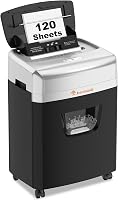
Amazon Basics 24-Sheet Cross-Cut Shredder Review: Worth It? (October 2026)
The Amazon Basics 24 sheet shredder is a strong choice for large household paper batches, with high feed capacity and a roomy pull-out bin. Choose it for regular clear-outs if you have floor space and can work around its cooling period.
On this page (9 sections)
- What makes the Amazon Basics 24-sheet shredder worth choosing?
- Is P-4 security enough for household records?
- How does it compare with Fellowes and Bonsaii?
- Will the Amazon Basics model fit your room?
- How should you set it up for the first session?
- What else can it shred safely?
- How do you avoid jams and overheating?
- What care does a cross-cut shredder need?
- Should you buy the Amazon Basics 24-sheet shredder?
The Amazon Basics 24 sheet shredder is a strong choice for large household paper batches, especially if you save statements, mail and old files for periodic clear-outs. Its high feed capacity and roomy pull-out bin make sense when you have enough paperwork to use them.
Choose it if you want to feed substantial bundles yourself and have a permanent floor spot. Skip it if you mainly shred a few pages each week, need unattended stack feeding or must meet a higher document security requirement.
What makes the Amazon Basics 24-sheet shredder worth choosing?
Its main advantage is less repetitive feeding during a paper clear-out, backed by a long working window and a large waste bin. The trade-off is a substantial machine that still needs you to sort and feed each bundle.
Amazon Basics 24-Sheet Cross-Cut Shredder: Best for household paper backlogs
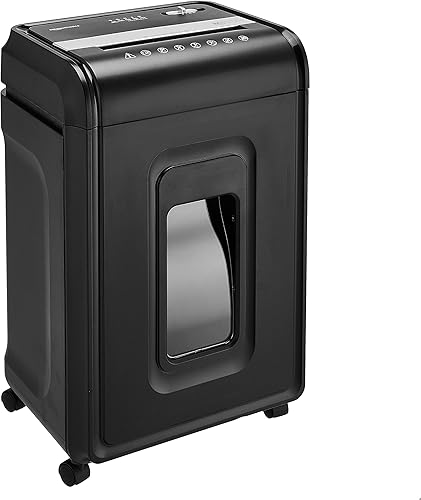
- Up to 24 sheets per pass
- P-4 cross-cut
- 40 minutes on, 50 minutes off
- 7-gallon pull-out bin
A strong fit for households that save paperwork for larger clear-outs. Its high feed capacity and roomy bin reduce feeding and emptying interruptions, but it needs a permanent floor spot.
Pros
- Highest sheet capacity among these picks
- 40-minute run time
- 7-gallon pull-out bin
- Casters included
Cons
- Heavy to lift between rooms or floors
- 50-minute cooling period interrupts extended jobs
The controls include auto, off, reverse and forward settings. Auto start handles normal feeding, while anti-jam auto reverse helps manage an overloaded feed.
LED indicators identify bin full, door open, overload, overheat and power conditions. Those separate signals are useful because a stopped shredder may need emptying, cooling or a properly closed bin rather than more paper pushed into it.
This is a manual-feed shredder: high capacity describes the bundle you insert, not a tray you can load and leave. If your priority is reducing time spent standing at the machine, compare auto-feed paper shredders before deciding.
How to use the Amazon Basics 24-sheet capacity
The maximum is 24 sheets of 20 lb bond paper per pass. That figure is a ceiling for a particular paper weight, so thicker sheets, folds and mixed mail need smaller bundles.
Start below the limit while you learn how your usual paperwork feeds. Square the edges, insert the bundle straight and let the cutters draw it through without pushing.
A sheet folded in half puts more layers through the cutters, even though you are holding one piece of paper. Thick envelopes and attached inserts also make a stack harder to judge by sight.
High capacity helps most when your backlog consists of ordinary loose pages. If you spend most of the session opening envelopes and removing inserts, sorting speed may matter more than the feed limit.
Is P-4 security enough for household records?
P-4 cross-cut is a reasonable choice for routine household paperwork, provided no stricter disposal rule applies. The Amazon Basics model makes pieces measuring 5/32 by 1-1/2 inches rather than long strips.
That suits a household choosing a shredder for bills, bank statements and correspondence with personal details. For employer records, client files or documents covered by a formal policy, confirm the required security class first.
Do not treat a “high security” name as a substitute for that check. The useful buying detail is the stated security level and whether it matches the records you handle.
Our guide to paper shredder security levels explains the classes. For a choice between ordinary cross-cut output and finer pieces, read micro-cut vs. cross-cut shredders.
Shredding is also a final disposal step, not a reason to discard records early. Separate documents you still need from those ready for disposal before you start, using our guide to what documents you should shred at home if you need help sorting.
How does it compare with Fellowes and Bonsaii?
Choose Amazon Basics for larger bundles and fewer bin-emptying stops, Fellowes for brief sessions with a disabling lock, or Bonsaii for smaller bundles over a longer session. The table shows the main capacity and timing differences.
| Shredder | Sheets per pass | Run time | Bin |
|---|---|---|---|
| Amazon Basics 24-Sheet Cross-Cut Shredder | Up to 24 | 40 minutes on, 50 minutes off | 7 gallons |
| Fellowes 14C10 14-Sheet Cross-Cut Shredder | Up to 14 | Up to 10 minutes | 5 gallons |
| Bonsaii 15-Sheet Cross-Cut Shredder | Up to 15 | Up to 40 minutes, then 40 minutes cooling | 5 gallons |
Fellowes suits short sessions in a shared home office
The Fellowes is the better fit when a Safety Lock matters more than clearing a large stack. The lock disables the machine when needed, which is useful in a home office shared with family or pets.
Fellowes describes the operation as quiet, making it worth considering where shredding happens near someone else's desk. Its P-4 cut also keeps the security choice straightforward for routine personal paperwork.
It accepts paper, credit cards, staples, paper clips and unopened junk mail. Even with that mail capability, check envelopes for unsupported contents rather than feeding unknown packets.
Skip it if you regularly set aside long blocks of time for old files. Its shorter working window is a meaningful limit for that routine, and a lock does not replace keeping children away from the feed opening.
Bonsaii suits smaller bundles during longer sorting sessions
The Bonsaii is a good alternative if you sort and shred steadily rather than feed thick stacks. It preserves a long working window while using a lighter body than the Amazon Basics model.
Swivel casters help with positioning, and the clear bin window lets you check waste buildup. Bonsaii specifies 60 dB operation, though that figure alone cannot establish how it will sound beside the other machines.
Skip it if your main goal is to feed the largest possible bundles or empty the bin less often. Those are the reasons to choose Amazon Basics here.
For a different comparison involving stack-loading machines, read Bonsaii vs. Amazon Basics auto-feed shredders.
Those models address a different feeding routine from the manual-feed machine reviewed here.
Will the Amazon Basics model fit your room?
It needs a dedicated floor position with room in front for the bin, rather than just enough space for the body. It measures 10.95 in deep, 14.76 in wide and 23.23 in high, and weighs 31.6 lb.
Measure the usable space under a desk, including braces, drawers and nearby cables. A spot that fits the cabinet but blocks the bin's path will turn every emptying job into furniture moving.
The included casters help with movement on the same floor. They do not solve carrying it upstairs or lifting it over obstacles, so choose its regular location before setting it up.
Leave the controls and power connection easy to reach, and keep ventilation openings clear according to the manual. Avoid a position where curtains, loose clothing or hanging cords can fall toward the feed slot.
Our paper shredder buying guide covers placement alongside capacity and security. The sheet capacity guide can help you decide whether your normal paper pile justifies this size.
How should you set it up for the first session?
Assemble it according to the manual, seat the bin fully and begin with a small paper bundle. A careful first setup helps you distinguish a door or bin issue from a feeding problem.
Place it on a level surface and install the casters as directed before regular use. Check that the bin moves freely and closes properly without trapping a bag or stray paper.
Sort your first pile into documents to keep, paper to shred and other materials. Remove binder clips, bindings and objects outside the machine's supported materials.
The 8.7-inch paper opening accommodates standard paper fed in the correct orientation. Align the pages with the opening instead of folding a wide bundle to force it through.
Keep hair, jewelry, fingers and loose sleeves away from the entry. Switch the machine off when you finish, and follow the manual's power-disconnection instructions before cleaning or reaching near the cutters.
What else can it shred safely?
It accepts CDs, DVDs, credit cards, staples and small paper clips as well as paper. That support has limits, so sort mixed material before feeding it.
Credit cards go through the dedicated slot one at a time. Metallic credit cards are excluded, and the ability to handle small fasteners does not extend to binder clips or other metal objects.
Follow the manual's slot and feeding instructions for discs. Keep disc and card waste separate from paper when your local recycling service requires it.
Do not assume that a padded envelope, laminated sheet, adhesive label or other unfamiliar material is acceptable. Check the manual before feeding anything outside the supported categories.
Amazon Basics warns against spraying or keeping aerosol products in or around the machine. Store spray cleaners and aerosol lubricants elsewhere.
How do you avoid jams and overheating?
Use smaller, straight bundles and respect the cooling schedule instead of waiting for protection features to stop the job. Automatic reverse and thermal shutoff are safeguards, not a reason to overload the machine.
For Amazon Basics, plan sessions of up to 40 minutes followed by 50 minutes off. A large backlog may therefore need several separate work periods, even if each individual bundle feeds easily.
Use the break to sort the next pile or put retained records away. Do not repeatedly restart a machine that has stopped because it needs cooling.
Check the bin during a long job, since waste can pile up beneath the cutters before the rest of the container looks evenly full. Stop and empty it as directed rather than compressing shreds upward while it runs.
If the overload indicator appears, stop adding paper and follow the manual's reverse procedure. Refeeding the same thick bundle without reducing it leaves the cause in place.
For a stubborn blockage, disconnect power before any manual clearing permitted by the instructions. Our guide to clearing a paper shredder jam explains the general process.
What care does a cross-cut shredder need?
Empty the bin regularly and follow the model's lubrication instructions. Paper dust and packed waste need attention, but maintenance should use approved methods rather than improvised cleaners.
Check the manual for the right lubricant, application method and interval. A fixed schedule borrowed from another shredder may not suit this one.
Our guide to how to oil a paper shredder explains general care steps. The machine's instructions should decide which oil or maintenance sheets you use.
Switch off and disconnect power before cleaning as directed, and keep liquids away from electrical parts. Do not reach into the feed slot to pull out scraps.
After emptying, check that the bin is fully seated before starting again. If the door-open light remains on, resolve the fit rather than trying to bypass the safety mechanism.
Should you buy the Amazon Basics 24-sheet shredder?
Buy the Amazon Basics 24 sheet shredder if you regularly clear substantial paper stacks and can give it a permanent floor spot. Its larger feed capacity and bin are useful when feeding and emptying would otherwise interrupt the job.
Choose Fellowes if brief desk sessions and a disabling Safety Lock match your household better. Choose Bonsaii if you prefer smaller bundles during a longer sorting session and want a lighter machine to position.
Skip all three if your documents require a security class beyond what the chosen model provides, or if unattended stack feeding is your main goal. Those needs should guide the purchase before sheet capacity does.
Before ordering, measure the bin-clearance space and estimate how much paper you normally shred in one sitting. Use our paper shredder buying guide to check those needs against the kind of machine you actually need.
Frequently asked questions
Is the Amazon Basics 24-sheet shredder P-4?
Yes, this Amazon Basics model meets P-4 security standards and cuts paper into pieces measuring 5/32 by 1-1/2 inches. That makes it a reasonable choice for routine household records, but check any workplace, client or other document disposal requirements before choosing it for more sensitive material.
How long can the Amazon Basics 24-sheet shredder run?
It can run for up to 40 minutes, followed by 50 minutes off. Automatic thermal shutoff protects the motor if continuous use exceeds the limit, but you should plan breaks rather than rely on it.
Use the cooling period to sort the next batch of documents.
Can the Amazon Basics 24-sheet shredder handle staples and cards?
Yes, it accepts staples, small paper clips and credit cards, plus CDs and DVDs. Feed credit cards one at a time through the dedicated slot and follow the manual for discs.
Metallic credit cards are excluded, and you should remove binder clips and other unsupported objects before feeding paper.
How much space does the Amazon Basics shredder need?
The body measures 10.95 inches deep, 14.76 inches wide and 23.23 inches high, with extra room needed to pull out the bin. Choose a level floor spot near an outlet and leave the controls accessible.
Its casters help with movement, but its weight makes stairs a separate planning issue.