When Can You Shred Old Tax Documents?
Decide when to shred tax records by checking the retention period and any open tax matters. Keep most supporting records for at least 3 years, counting early returns from their due date and late returns from filing; payments, asset records, and other exceptions can require longer storage.
On this page (8 sections)
- When to shred tax records under the usual IRS rule
- When should you keep tax records longer than 3 years?
- Which tax records should you keep for property and investments?
- How should you sort old tax papers before shredding?
- Which shredder suits your tax-record cleanup?
- How do you set up and care for a shredder?
- Should you shred tax documents yourself or use a service?
- When to shred old tax records: make the final decision
You can usually decide when to shred tax records using a 3-year starting point, but check exceptions before destroying supporting papers. Count early returns from their due date and late returns from the date you filed.
Payment dates, refund claims, asset records, and unresolved tax matters can require longer retention. Sort first, then choose a shredder based on how much cleared paperwork you have and how you prefer to feed it.
When to shred tax records under the usual IRS rule
Keep most supporting tax records for at least 3 years after the relevant filing date. The IRS generally has 3 years to assess additional tax, though exceptions can extend that period.
A return filed before its due date is generally treated as filed on the due date. For a late return, the assessment period generally starts when you filed.
For a refund claim, the usual deadline is 3 years from filing or 2 years from paying the tax, whichever is later. Refund limits and exceptions can also apply, so the assessment period alone isn't a complete shredding checklist.
State requirements can differ from federal rules. Check the IRS guide to how long to keep tax records alongside any state requirements that apply to you.
When should you keep tax records longer than 3 years?
Keep records longer when they support an exception, an asset, or an unresolved matter. A folder's age doesn't tell you whether its contents are safe to destroy.
- 6 years: The IRS generally has this long to assess additional tax if you omitted income exceeding 25% of the gross income shown on your return.
- 7 years: Keep relevant records for a claim involving a loss from worthless securities or a bad debt deduction.
- Indefinitely: Keep relevant records if you didn't file a required return or filed a fraudulent return.
- Until resolved: Retain evidence needed for an open audit, refund claim, or dispute, even after the usual period has passed.
These federal timelines don't cover every exception. Papers may also remain useful for insurance, lending, or another legal purpose after their tax purpose ends.
When can I shred tax records if I never filed?
Keep records indefinitely for a year in which you never filed a required return. The usual assessment period generally doesn't begin until a return is filed.
Gather the income records and receipts needed to address the missing return. Ask a qualified tax professional for help if you don't know whether filing was required.
Which tax records should you keep for property and investments?
Keep records establishing tax basis through disposal of the asset and the applicable retention period afterward. An old purchase receipt can affect a much later gain, loss, or depreciation calculation.
For property, save purchase and sale documents, closing statements, and records of improvements that could affect basis. For investments, retain purchase records and statements tracking adjusted basis, including reinvested dividends when relevant.
Store these papers separately from routine annual receipts so they don't enter a yearly discard pile. If basis carries over to replacement property, keep earlier records while they still support that property's basis.
When to shred tax records for a home sale
Keep home purchase, improvement, and sale records through the applicable retention period for the sale return. Don't discard improvement invoices simply because the work happened more than 3 years ago.
Group closing papers and relevant invoices with the sale documents. If you're unsure whether an expense affects basis, keep its record until you can confirm its role.
How should you sort old tax papers before shredding?
Separate retention decisions from shredding preparation. Decide what can go first, then remove unsuitable materials from that discard pile.
Use 3 clearly marked groups:
- Keep: Filed return copies and supporting papers still within their retention period.
- Check: Documents with unclear dates, asset connections, or unresolved questions.
- Shred: Sensitive papers whose retention needs have ended.
Write filing and payment dates on each tax-year folder instead of relying on the year printed on the return. For other household papers, use our checklist of what documents you should shred at home.
If you retain scans, check every page for readable text, complete edges, and missing backs before destroying paper. Secure the files and their backups, and retain originals when a law, transaction, or dispute requires them.
Which shredder suits your tax-record cleanup?
Choose auto-feed for sorted stacks, manual capacity for varied batches, and bin size for fewer emptying stops. All 3 options below are P-4 machines, but their feeding methods and cut sizes differ.
The Bonsaii produces smaller paper pieces than the 2 cross-cut models here. Our guide to micro-cut versus cross-cut shredders explains the practical differences, while paper shredder security levels explains P-levels.
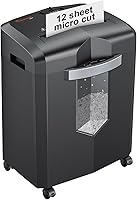
Bonsaii: for sorted stacks of loose paper
The Bonsaii handles 120 sheets automatically or 12 sheets manually, making it the clearest fit for a prepared stack you don't want to feed in small batches. Its micro-cut output measures 4 x 12 mm.
Automatic mode accepts paper only; manual mode handles mail, nonmetallic credit cards, and staples. Separate mixed items before loading rather than putting a whole unsorted folder into the automatic tray.
It runs for up to 30 minutes automatically or 10 minutes manually, followed by 60 minutes off. The 5.9-gallon pull-out bin and casters help with emptying and placement.
Choose it for recurring paper stacks. Skip it if most of your job consists of discs or mixed materials, or if you need long manual-feed sessions.
Fellowes 99Ci: for mixed household and office paperwork
The Fellowes suits regular mixed batches, with an 18-sheet manual feed and support for staples, paper clips, credit cards, CDs, DVDs, and junk mail. Its P-4 cross-cut particles measure 5/32 x 1-1/2 inches.
Its 9-gallon pull-out bin is the largest here, which matters if frequent emptying would interrupt your cleanup. It runs for up to 30 minutes before needing to cool.
SafeSense stops shredding when hands touch the paper opening, and Fellowes describes its feed system as jam-proof. Still, keep hands clear and avoid forcing thick bundles through the opening.
Choose it for varied documents and fewer bin stops. Skip it if your priority is loading a stack automatically or getting the smaller pieces produced by the Bonsaii.
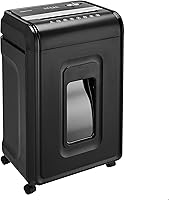
Amazon Basics: for larger manual paper batches
The Amazon Basics suits buyers who prefer feeding thicker batches by hand. It accepts up to 24 sheets of 20-pound bond paper and produces P-4 cross-cut pieces measuring 4 x 38 mm.
Its duty cycle is 40 minutes on and 50 minutes off. A 7-gallon pull-out bin, casters, and indicators for overload, overheating, and a full bin help you manage a longer session.
It accepts staples and small paper clips, with CDs, DVDs, and credit cards fed individually through the dedicated slot. Auto reverse helps address jams, but it doesn't replace careful loading.
Choose it for a substantial manual-feed cleanup. Skip it if you want automatic stack feeding or micro-cut output; our paper shredder buying guide covers other workload choices.
How do you set up and care for a shredder?
Leave room to feed paper and remove the bin, then prepare batches within the machine's limits. Place the shredder on a stable surface with clear ventilation and keep the cord out of walking paths.
Remove folders, binder clips, and any materials your manual doesn't permit. Sheet limits are ceilings, so use smaller batches for folded, wrinkled, or thicker paper rather than treating every sheet as equal.
Empty the bin before shreds crowd the cutters, and follow the required cooling periods. Keep aerosols away from the shredder and don't feed metallic credit cards.
Follow the manufacturer's lubrication instructions and use a suitable lubricant. Our guide to how to oil a paper shredder explains the process.
If paper stalls, stop adding more. Follow the manual and these steps to clear a paper shredder jam, disconnecting power before any permitted manual clearing.
Should you shred tax documents yourself or use a service?
Home shredding suits manageable batches; a secure destruction service suits a backlog you can't reasonably process. Compare the work with the time required for sorting, feeding, cooling, and emptying.
A service doesn't remove the need to check retention dates first. Confirm how documents are collected, stored, and destroyed, and request a certificate if you need a record of destruction.
Keep both intact papers and shredded material secure until disposal. Follow local collection rules, since shredded paper may need separate handling; see what to do with shredded paper.
When to shred old tax records: make the final decision
Shred only when retention periods have ended and no related need remains. Keep uncertain papers in the check group rather than letting a cleanup deadline decide their fate.
Pick the Bonsaii for sorted auto-feed stacks, the Fellowes for mixed materials and a larger bin, or the Amazon Basics for thicker manual batches. Use a secure service if the cleared backlog exceeds the time you can give it.
Once you've settled when to shred tax records, work through the rest of your files with our documents-to-shred checklist.
Frequently asked questions
How long should I keep tax records before shredding them?
Keep most supporting tax records for at least 3 years, counting early returns from their due date and late returns from filing. Refund claims generally have a deadline of 3 years from filing or 2 years from payment, whichever is later; exceptions, asset records, and open matters can require longer retention.
Can I shred tax documents after 7 years?
You can often shred routine supporting papers after 7 years, provided the applicable retention period has ended and no related matter remains open. Keep documents that still establish an asset's basis, concern an unfiled or fraudulent return, or remain necessary for state taxes, insurance, or another legal purpose.
Should I keep tax returns forever?
Keep copies of filed tax returns as a long-term reference, even after you can discard some supporting receipts. They can help you prepare later returns and answer questions about past filings, but keeping a return alone doesn't replace retaining records needed for asset basis or an unresolved tax matter.
What should I do before shredding old tax papers?
Check filing and payment dates, applicable retention periods, and whether any paper supports an asset or unresolved matter. Separate documents you must retain from those cleared for destruction, then prepare only the discard pile for shredding.
If you keep scans, check that every page is readable and securely backed up.